A San Sebastián Landmark Begins a New Chapter as Hotel Palacio Bellas Artes, Curio Collection by Hilton
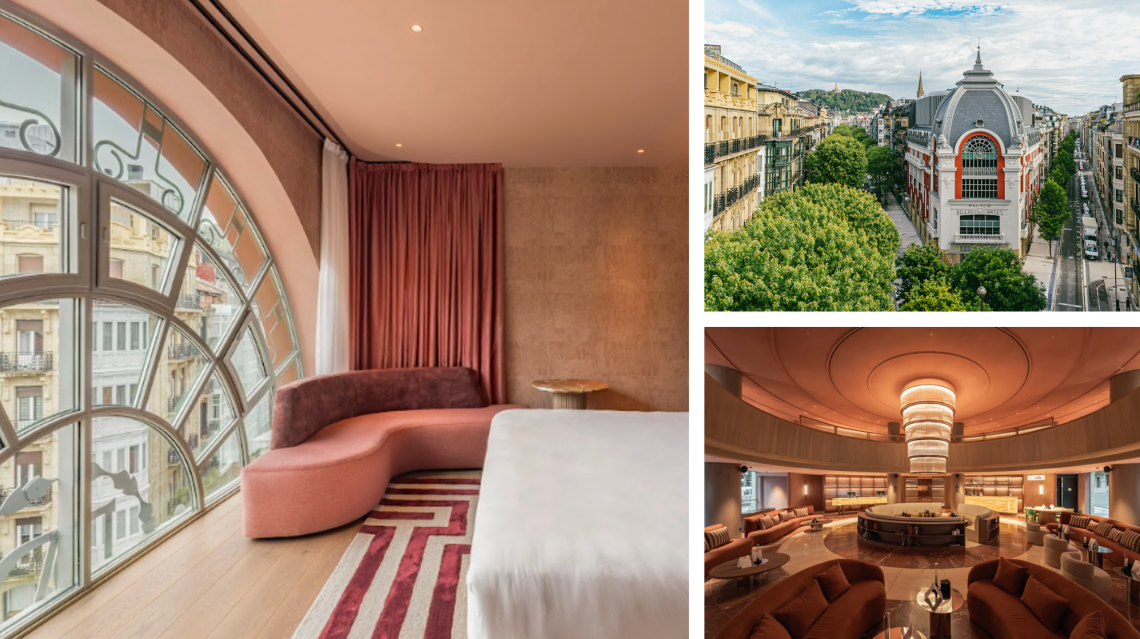
Palacio Bellas Artes, a 1914 Beaux Arts building that housed one of Spain’s earliest cinemas, has been carefully restored and reimagined as a contemporary hotel, Hotel Palacio Bellas Artes San Sebastián, Curio Collection by Hilton. The 81 guest-room hotel is home to Lotu, a new dining destination by chef Andoni Luis Aduriz – and brings together gastronomy, design and cinematic heritage to create a one-of-a-kind stay.
A Storied History
Located in the centre of the city, the property is the latest addition to Curio Collection by Hilton’s global portfolio of individually remarkable hotels, and sits within walking distance of the coastline, historic Old Town and San Sebastián’s renowned pintxos bars, galleries and theatres.
Originally designed by architect Ramón Cortázar, a founder of the region’s distinctive Basque architectural style, Palacio Bellas Artes opened at the height of San Sebastián’s Belle Époque and quickly became one of the city’s most emblematic buildings. Following an extensive restoration led by architect Ignacio Quemada – from the reconstruction of the iconic dome, to the meticulous refurbishment of the façade and decorative detailing – the landmark is reopening to the public for the first time in four decades, preserving its defining Beaux Arts features while introducing a contemporary, film-inspired hospitality experience.
Cinematic Stays
The hotel’s interiors were reinterpreted by Spanish interior designer Isabel López Vilalta + Asociados with respect for the cinema’s original layout. Today, guests enter the lobby through the former stage, passing beneath the proscenium arch before moving through a series of spaces inspired by light, shadow and movement.
The hotel offers 81 rooms and suites, each aligned to the hotel’s cinematic narrative. Room categories begin with the ‘Gallery’ rooms, the hotel’s largest room category, distributed across all four floors and offering a variety of layouts and unique connections with the surrounding cityscape. They progress through ‘Amphitheatre’ rooms – located on the top two floors and inspired by the theatre’s upper tiers – to the more spacious ‘Grand Stalls’ rooms, some featuring a balcony or separate living room. At the top end, suites including the ‘Front Box’ and ‘Corner Box’ echo the most coveted seats in the house, while the Cupula Suite sits beneath the dome.
Every room also functions as an exhibition space, forming part of a gallery that spans the hotel. Curated by Basque artist Lander Andonegi, Creation: Light, Movement and Gaze is a site-specific collection of 81 works – one per room – drawing on the building’s origins as a theatre and cinema.
Dining and Social Connection
Central to the hotel is Lotu, led by internationally acclaimed chef Andoni Luis Aduriz, the culinary force behind the two-Michelin-starred Mugaritz. Its name means “to tie” or “to connect” in Basque – fitting for a project inspired by the great dining rooms of the early twentieth century, those legendary establishments where actors, writers, filmmakers, intellectuals and travellers once gathered between premieres, festivals and summer seasons. Lotu draws on the memory of those places to return gastronomy to its role as a meeting point for people, conversations and shared moments.
From that spirit, Lotu revisits the classic cuisine of the last century and reinterprets it through a contemporary lens. The menu brings together recognisable classics – such as pâté en croûte, beef Wellington in the style of La Tour d’Argent, and sole meunière – alongside dishes such as txangurro (spider crab) donostiarra and chuleta. Rather than a single style of dining, Lotu lets each guest choose how they want to eat: the casual and the formal can share the same table, from a smashburger to a beef Wellington, or a tagliatelle al ragú to Oscietra caviar.
Set in the theatre’s former box, Lotu spans two spaces and serves guests throughout the day. Breakfast is brought to the table so everything arrives freshly made, from viennoiserie and breads to dishes such as Japanese pancakes, eggs benedict and brioche egg sandwiches. Down at street level, a bar opens onto the lobby. Behind both is the project’s own bakehouse – a working space within the kitchen, where the breads and pastries for every menu, from breakfast to the bar and restaurant, are made fresh each day.
Simon Vincent, executive vice president and president, EMEA, Hilton, said, “San Sebastián is one of Europe’s most compelling destinations, celebrated for its world-class gastronomy, coastal beauty and rich cultural character. The opening of Hotel Palacio Bellas Artes San Sebastián represents an important addition to our portfolio – bringing new life to one of the city’s most iconic historic buildings while strengthening our offering in Spain, where we now have more than 65 hotels trading and in the pipeline.”
Jenna Hackett, senior vice president and global category leader, Lifestyle Brand Management, Hilton, said, “Each Curio Collection by Hilton hotel is individually remarkable, and Palacio Bellas Artes is no exception – offering a distinctive stay rooted in the building’s rich history. Palacio Bellas Artes is a celebration of San Sebastián’s cultural identity, bringing together cinematic heritage, thoughtful design and timeless gastronomy. The restoration of this historic building, together with its artistic and culinary vision, makes it a standout addition to the Curio Collection portfolio.”
Reservations can be made directly through the hotel’s website or on the Hilton Honors mobile app. Hotel Palacio Bellas Artes is part of Hilton Honors, the award-winning guest loyalty programme for Hilton’s 28 world-class brands.