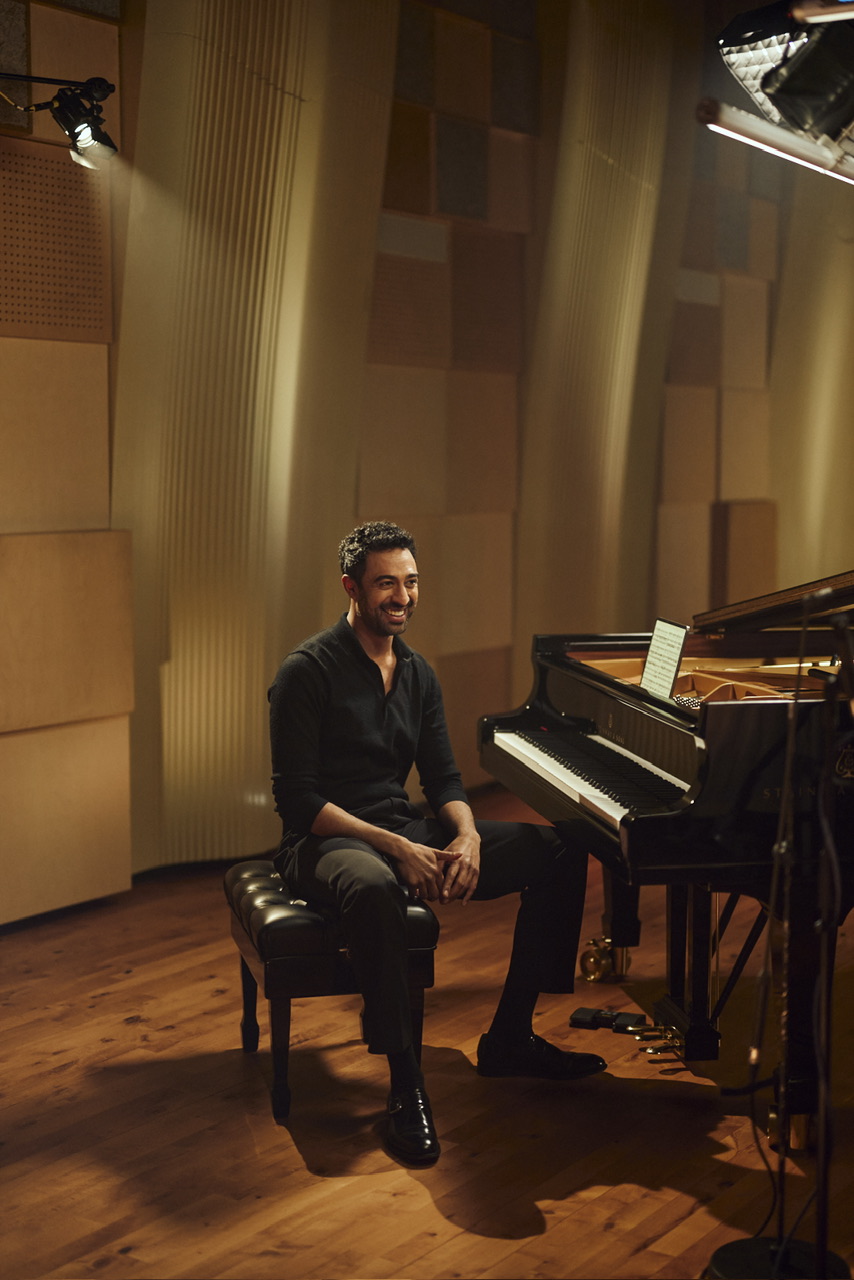
Concert pianist Cyril Ibrahim on his role in ‘Mozart: Genius for Hire’
Concert pianist Cyrill Ibrahim makes his Sky Arts debut in Mozart: Genius for Hire, now available to watch. The documentary is a cinematic reimagining of the life and music of one of classical music’s greatest minds, forming part of Sky Arts’ new Mozart Season — a celebration of the composer’s enduring legacy. ONIN had the privilege of speaking with Cyril about the project.
I first encountered Cyril at World Heart Beat Embassy Gardens, where his recital Harmonie du Soir wove solo piano works and new commissions into a journey through twilight and nightfall. His playing — effortless, precise, and deeply attuned — held the room in stillness. It’s that same magnetic quality he now brings to his Mozart interpretations for Sky Arts.
In Mozart: Genius for Hire, Cyril performs solo piano works and a striking interpretation of the Violin Sonata in E minor with world‑renowned violinist Gil Shaham, alongside sequences with soprano Danielle de Niese. Together, these performances reveal the emotional and dramatic depth of Mozart’s genius. Cyril approaches the composer through a contemporary lens, exploring how freedom, individuality, and emotional truth continue to shape the modern performer’s experience.
The film also features David Harewood, Matthew Broome, Danielle de Niese, Gil Shaham, and expert commentary from John Suchet OBE, Annilese Miskimmon, and Professor Simon Keefe. Together, they tell the story of Mozart’s decision to abandon royal patronage and forge a new life as Vienna’s first great musical freelancer. Sky Arts’ Mozart Season also includes ‘Mozart’s Women: A Musical Journey’ and ‘Mozart’s Sister’ both spotlighting the women who shaped the composer’s world.
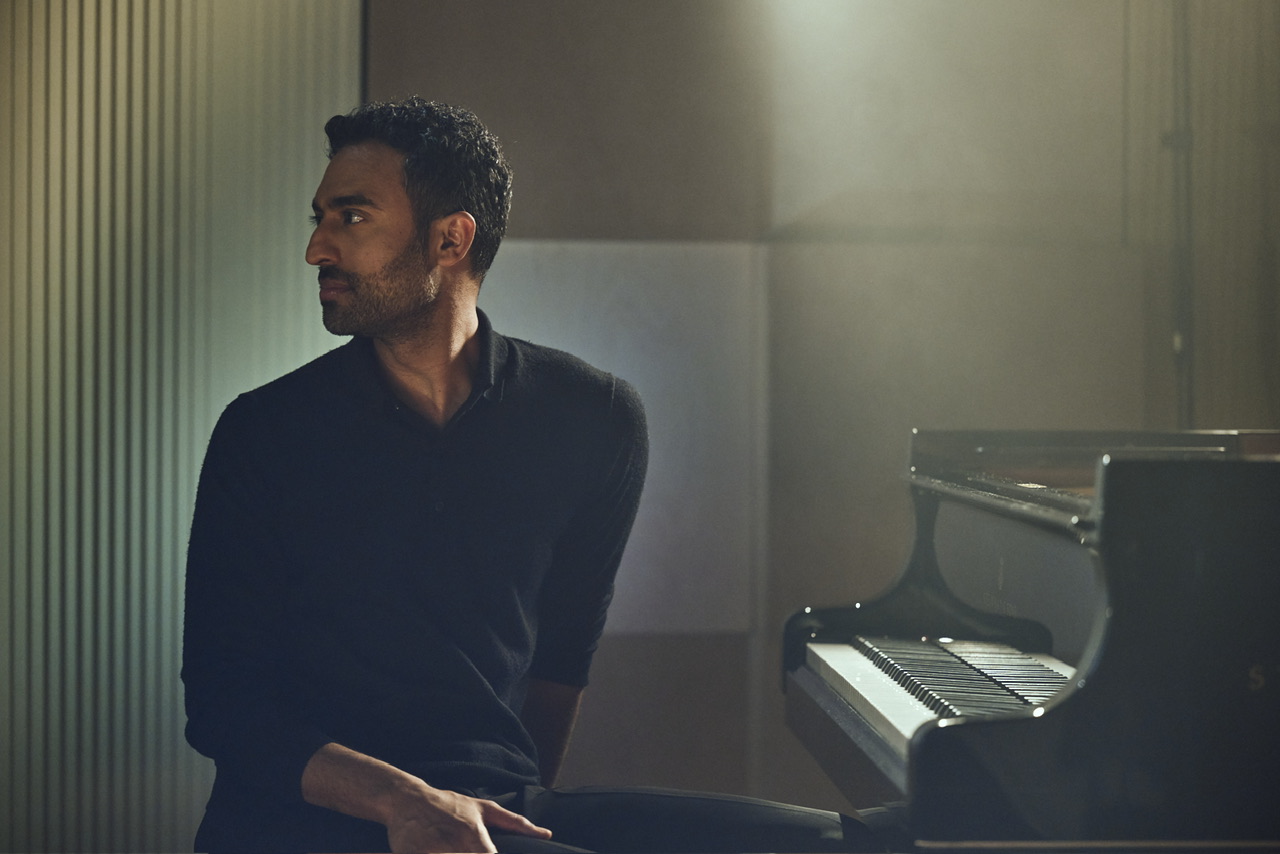
Photo credit: Rory Mulvey / Section 52 Films.
Cyril, a Royal College of Music graduate, is founder of The Classical Music Collective, an educational and artistic mentorship platform supporting young musicians. He is currently Artist-in-Residence at World Heart Beat, a concert venue and charity offering tuition, instruments, and performance opportunities to hundreds of young people each year. To understand the artistry behind ‘Mozart:Genius for Hire’, we asked Cyril to reflect on the film, the music, and the creative journey.
1. What drew you to Mozart’s music and how has your relationship with his work evolved over time?
Mozart was one of the first composers whose music felt deeply human to me. At first, I was drawn to the clarity and balance of his writing, but over time I’ve come to realise how deceptive that simplicity is. Beneath the surface lies vulnerability, wit, darkness, and extraordinary emotional honesty. My relationship with Mozart has evolved from admiration into a deeper dialogue — with a composer who never hides the truth.
2. As a pianist, do you feel Mozart’s music challenges you technically, emotionally, or both?
Absolutely both. Mozart is often described as easy for amateurs but one of the hardest composers for professionals, precisely because the music is so open, clear, and transparent. There’s nowhere to hide. Every phrase, every articulation, every transition has to be carefully shaped and paced. It’s a constant technical and emotional challenge — and one that also demands deep self-knowledge as a musician.
3. Is there a particular piece in the programme that feels most personal to you, and why?
Yes — there are two pieces that feel especially personal to me. One is the A minor Piano Sonata, from which I perform the Andante cantabile in the documentary. It has an extraordinary sense of flow and musical intention that I deeply relate to. There’s a directness and emotional clarity in that piece that feels very close to how I experience music.
The other is the E minor Violin Sonata, which I performed with Gil Shaham. Mozart’s chamber music is all about dialogue — a real conversation between people — and that comes across very strongly in the documentary. Working with Gil was an amazing experience. To collaborate with such an extraordinary artist and musician, and to project the sound together with complete openness, was absolutely fantastic. It felt like a genuine musical exchange.
4. How do you balance the demands of being faithful to Mozart’s genius while still expressing your own artistry?
That balance is one of the most fascinating aspects of being a performer. Being faithful to the music means doing a great deal of work to understand the style, language, and artistic world of the composer. But through that process, you inevitably draw on your own history, experiences, heritage, and upbringing. Those elements naturally become part of the interpretation. By playing the music, you place a part of yourself within it, while remaining rooted in the composer’s voice.
5. What can audiences expect from Mozart: Genius for Hire?
Mozart: Genius for Hire presents Mozart as a working artist — someone trying to survive, to be heard, and to find ways for his music to reach an audience. He was constantly adapting, responding to circumstances, and searching for opportunity, which makes his story feel incredibly modern. Audiences can expect an honest and relatable portrait of an artist whose struggles and ambitions resonate strongly today — told through music first.
6. How does performing for television differ from performing in a concert hall? Did you adapt your playing or presentation style?
Performing for television and performing in a concert hall are very different experiences, but the core intention remains the same. I try to remain as faithful as possible to the music and not allow the presence of cameras to affect the essence of what I’m doing. Projection changes — not only of sound, but of meaning — and that always comes from the inside. From technical work, preparation, and clarity of intention, until what you want to say can truly project outward, whether to a live audience or through a camera lens.
7. What role do you think classical music — and Mozart in particular — plays in today’s cultural landscape?
Classical music can feel daunting, but it offers something increasingly rare: the experience of listening in silence. It asks for time, attention, and openness, allowing a piece of music to unfold and letting its emotional worlds come to you. Mozart is especially powerful in this respect — his clarity and simplicity invite the listener in, while containing immense emotional depth. In a world where music constantly comes to us, classical music encourages us to slow down, listen deeply, and search for beauty in things that reveal themselves over time.
8. Where can audiences watch Mozart: Genius for Hire now, and what was it like working with the creative team behind the documentary?
Mozart: Genius for Hire is available to watch on Sky Arts, and can also be streamed on demand via Sky, NOW, and Virgin Media, allowing audiences to continue discovering the film beyond its initial broadcast.
Working on the documentary was a genuinely special experience because everyone involved shared the same priority: the music had to come first. Collaborating with Section 52 Films, and with producers Sabina Harper and David Harewood, felt incredibly supportive and artist-led. The readings of Mozart’s letters by David Harewood and Matthew Broome added a powerful human layer, helping to bring his inner world vividly to life. It felt like a collective effort to tell Mozart’s story honestly — as a living, working artist whose experiences still resonate today.
Fur Cyrill
Website: https://www.cyrillibrahim.com
Instagram: https://www.instagram.com/cyrillibrahim
X: https://x.com/cyrillibrahim
YouTube: https://m.youtube.com/cyrillibrahimpianist
For World Heart Beat
Address: World Heart Beat Embassy Gardens, Nine Elms
Instagram: https://www.instagram.com/worldheartbeat
Instagram: https://www.instagram.com/cyrillibrahim